
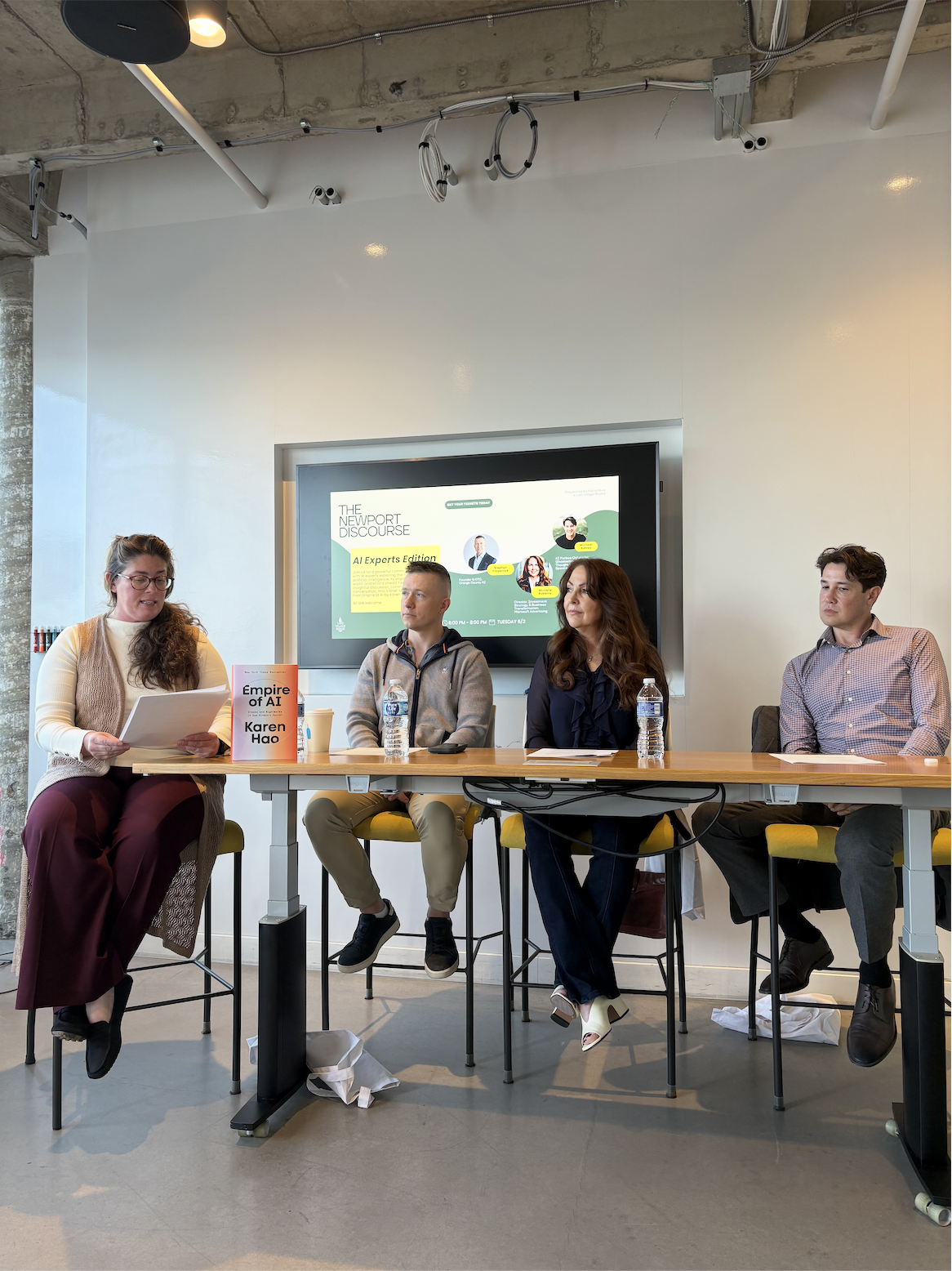
What is Newport Discourse?
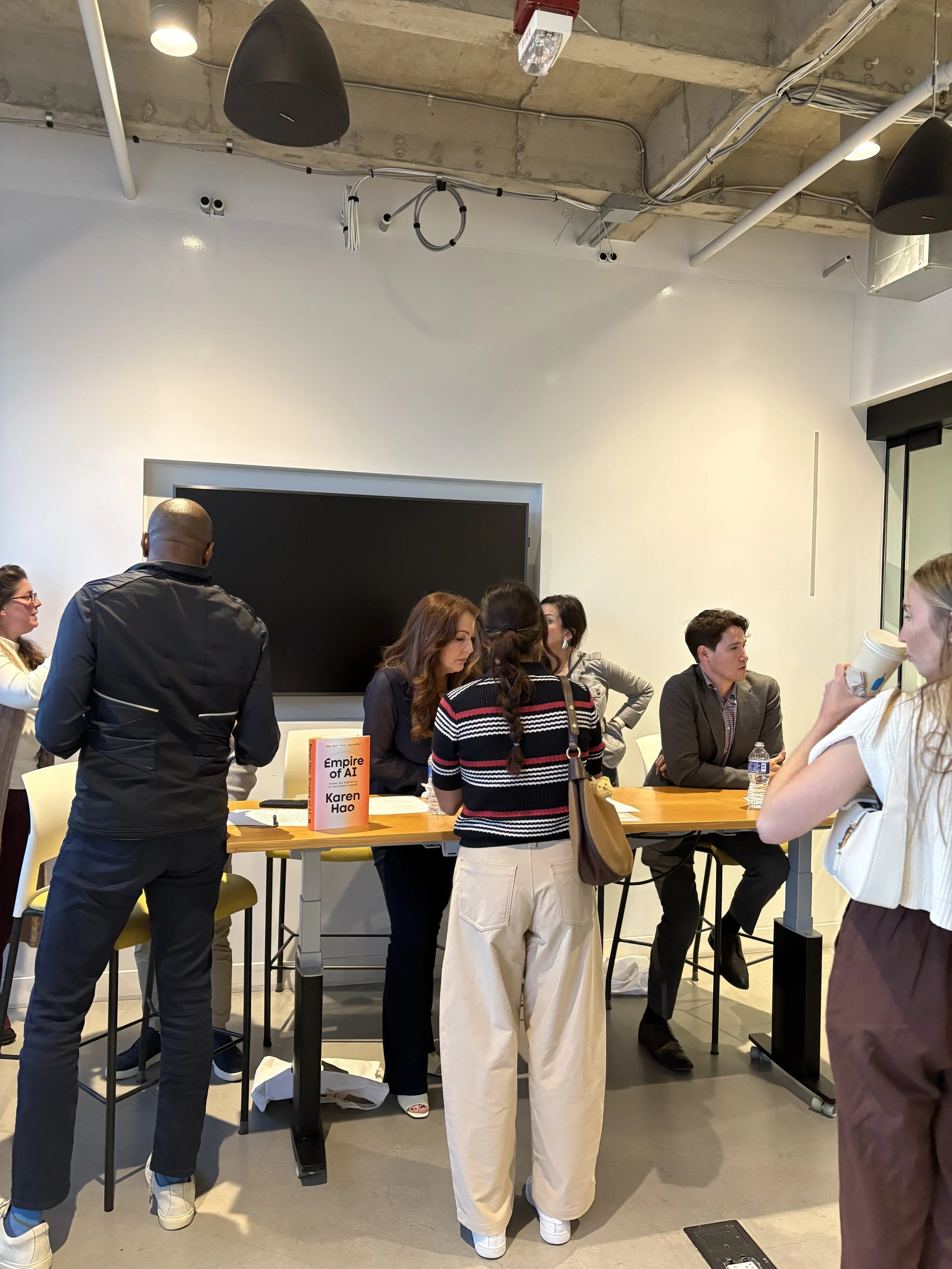
Newport Discourse is a joint initiative by HanaHaus and Lido Village Books designed to spark meaningful conversation across generations. Each event centers on a compelling topic, typically featuring a professor delivering a condensed lecture. This time, Newport Discourse brought together a panel of experts in the field of AI to discuss Karen Hao's Empire of AI. The goal is simple: challenge ideas, encourage mindful dialogue, and be inspired.
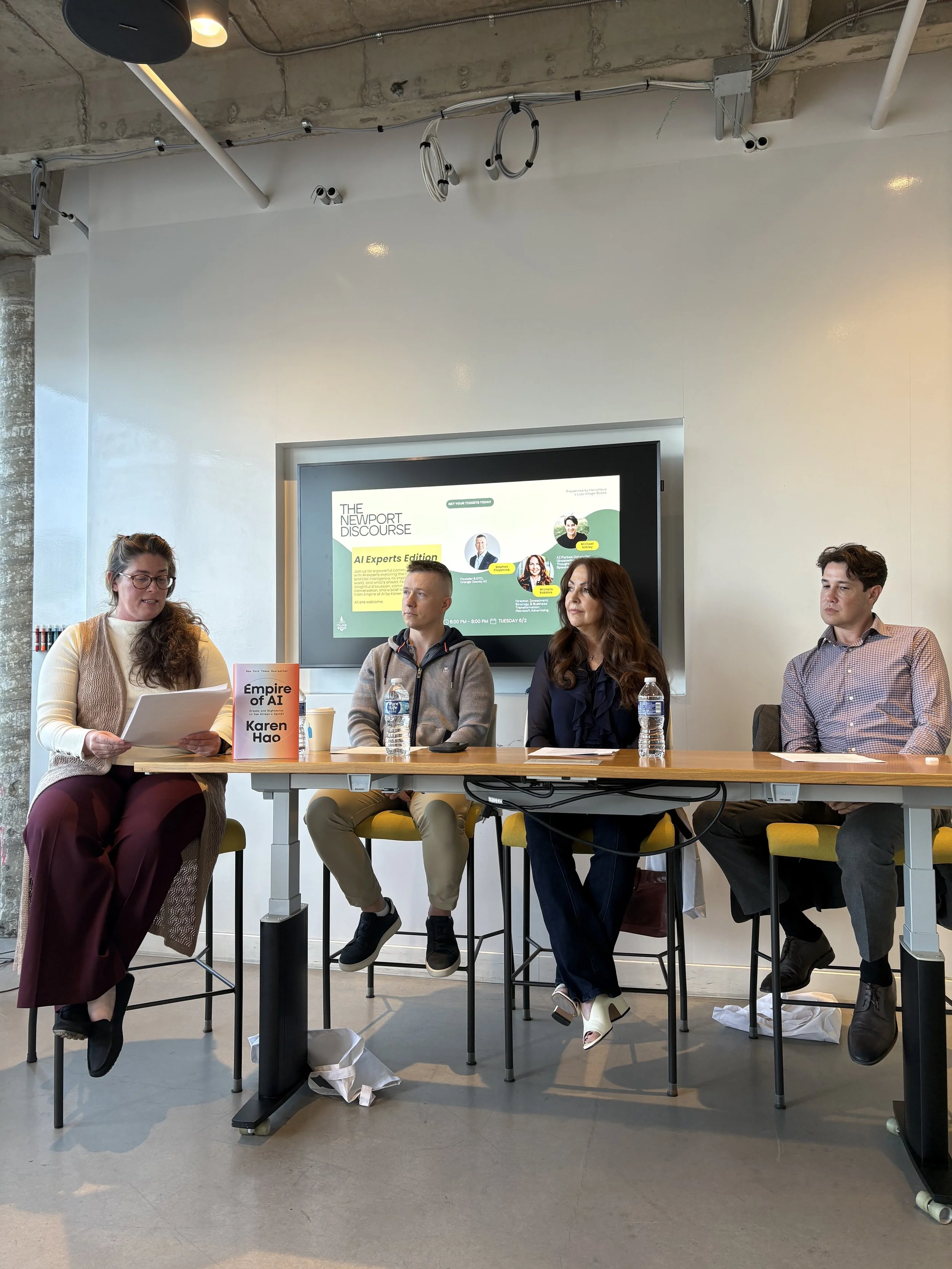
In order from left to right, Michelle Pierce, Stephan Fitzpatrick, Michelle Robbins, Michael Ashley
Moderator
Michelle Pierce | Owner, Lido Village Books
Panelists
Stephan Fitzpatrick | Founder & CTO, Orange County AI
Michelle Robbins | Director, Investment Strategy & Business Transformation, Microsoft Advertising
Michael Ashley | AI Forbes Columnist, Ghostwriter for Aspiring Thought Leaders, Public Speaker, Tech Podcaster
Summary of Empire of AI by Karen Hao
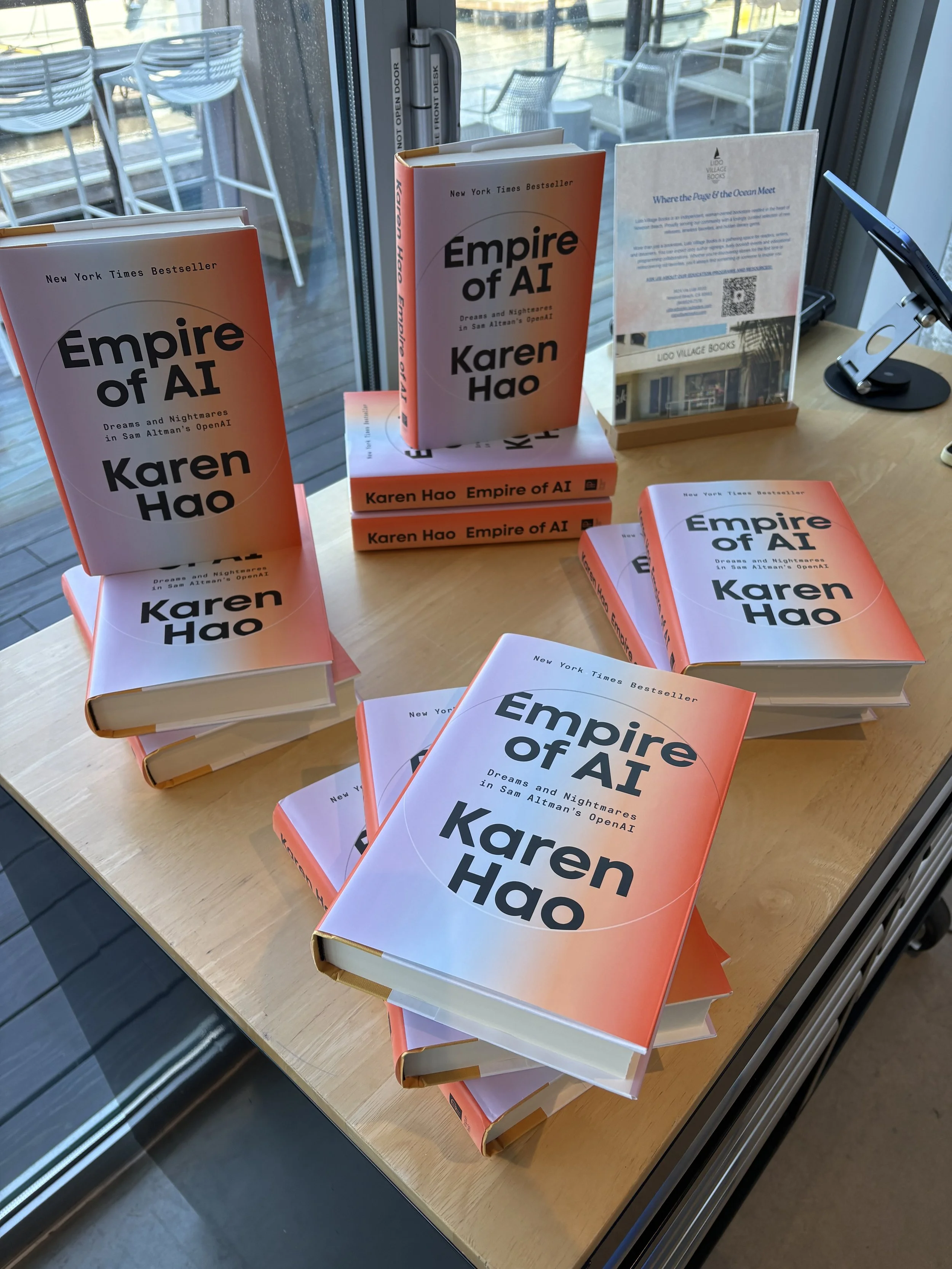
Empire of AI by Karen Hao is an eye-opening account of arguably the most consequential tech arms race in history, one that is reshaping the planet in real time from inside the company driving the frenzy. The book traces OpenAI from its origins as a nonprofit with safety enshrined as its core mission, an organization meant, as Sam Altman has said, to serve as a check against purely mercantile and potentially dangerous forces. Through deep investigative research and reporting, Hao surfaces a core truth about this massively disruptive sector: that its notion of success demands an almost unprecedented consumption of resources, from the computing power of high-end chips and massive language models, to the staggering volumes of data amassed at scale, to the human workers cleaning up that data for sweatshop wages across the Global South, to an alarming spike in global energy and water usage underlying it all. What emerges is a portrait of a new and ominous age of empire, one in which only a small handful of globally scaled companies can even enter the field of play. Drawing on the perspectives of Silicon Valley engineers, Kenyan data laborers, and Chilean water activists, Hao presents the fullest picture of AI and its reach that we have seen to date.
Here’s What the Experts Had to Say
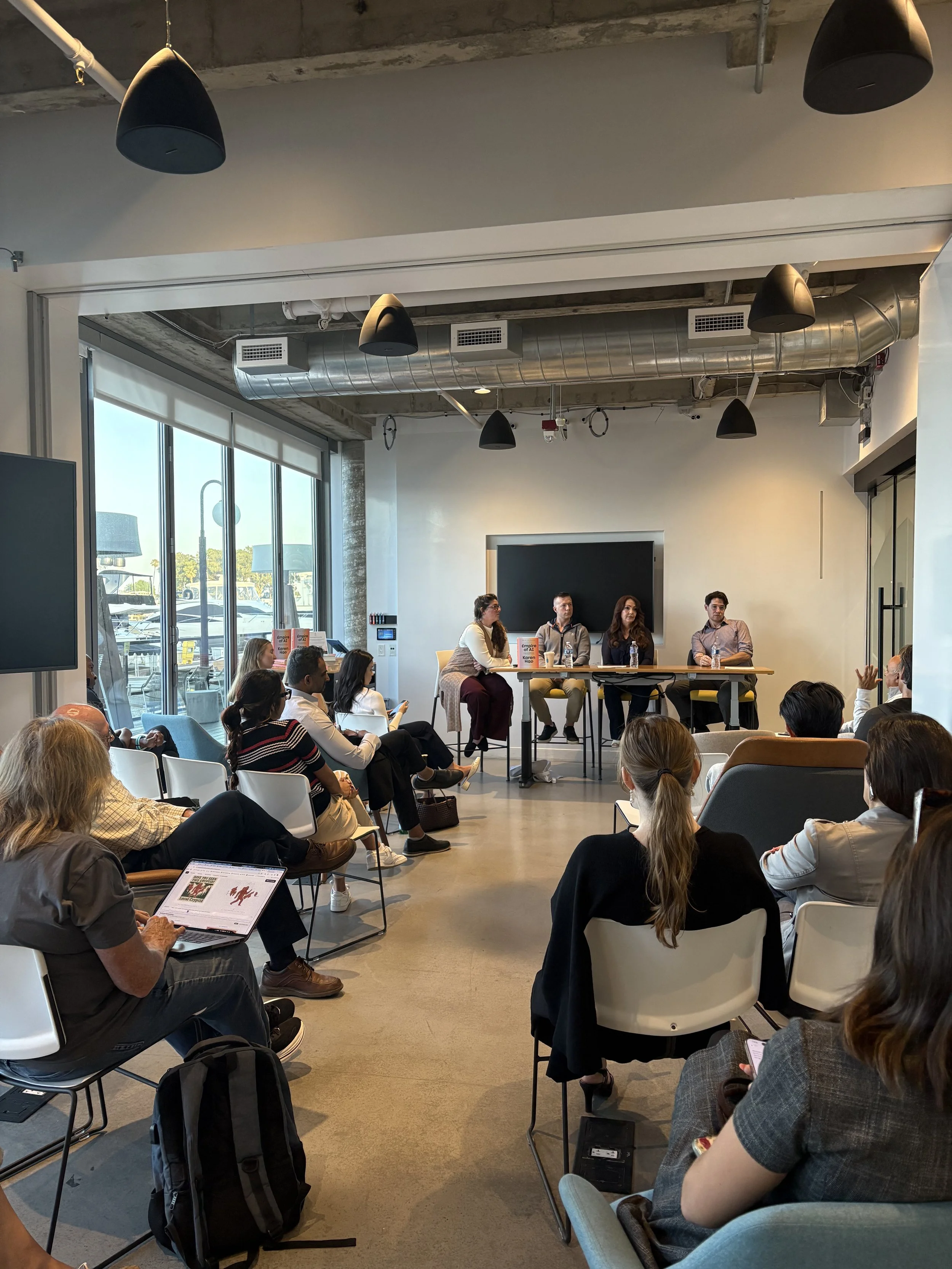
On Tuesday, June 2nd, HanaHaus and Lido Village Books joined forces to host a generational conversation on one of the most pressing topics of our time — the rise of artificial intelligence and its impact on society. Moderated by Michelle Pierce [Owner, Lido Village Books], the panel brought together Stephan Fitzpatrick [Founder & CTO, Orange County AI], Michelle Robbins [Director, Investment Strategy & Business Transformation, Microsoft Advertising], and Michael Ashley [AI Forbes Columnist, Ghostwriter for Aspiring Thought Leaders, Public Speaker, Tech Podcaster] for a wide-ranging discussion anchored by Karen Hao's Empire of AI.
Panelists largely agreed that Hao did a solid job covering the major players and systemic issues — the environmental costs of data centers, the murky intentions of AI's founders, and the concentration of power in a handful of companies — while noting the book could have gone deeper in places. The conversation quickly expanded beyond the book itself, drawing comparisons to the East India Company, debating whether figures like Sam Altman are driven by profit, power, or a genuine god complex, and wrestling with whether Anthropic represents a meaningfully different and more ethical model than OpenAI. Some panelists pushed back on the book's balance, arguing Hao was more critical than fair, while others felt she wasn't critical enough given the stakes involved.
The discussion grew particularly heated around the social and economic consequences of AI's rapid expansion. Panelists explored the erosion of public trust in media, institutions, and each other, driven partly by the atomization that algorithms create and the near impossibility of distinguishing real content from AI generated material. The looming threat of job displacement was debated at length, with some arguing that fear of a "job apocalypse" is itself a tool Silicon Valley uses to inflate valuations, while others pointed to real and present disruption already hitting tech workers and, soon, entire communities built around industries like call centers. There was broad frustration that policymakers and tech leaders keep proposing band-aid solutions to AI-driven job loss, rather than leaning on strategies that have worked throughout history, like taxing corporations, investing in public infrastructure, and proactively retraining displaced workers for new roles.
Despite the anxieties, the panel closed on a note of cautious optimism, particularly around the opportunity AI presents for small teams and entrepreneurial individuals to build businesses and solve real problems at a scale previously unimaginable. Several panelists emphasized that the technology itself is neutral and that what matters most is the story society chooses to tell about it and the values that guide its adoption. Deeper concerns were raised about the human cost of removing friction from daily life, especially for younger generations losing the ability to connect, tolerate discomfort, and develop resilience. The group agreed that intentional parenting, strong communities, analog experiences, and a deliberate push to keep humans in the driver's seat will be essential as AI quietly weaves itself into every corner of modern life.
Additional books mentioned in the conversation
· If Anyone Builds It, Everyone Dies: Why Superhuman AI Would Kill Us All by Eliezer Yudkowsky and Nate Soares
· The Reverse Centaur’s Guide to Life After AI: How to Think About Artificial Intelligence Before It’s Too Late by Cory Doctorow
· Nexus by Noah Harari
All titles, including Empire of AI by Karen Hao, can be purchased at Lido Village Books.