
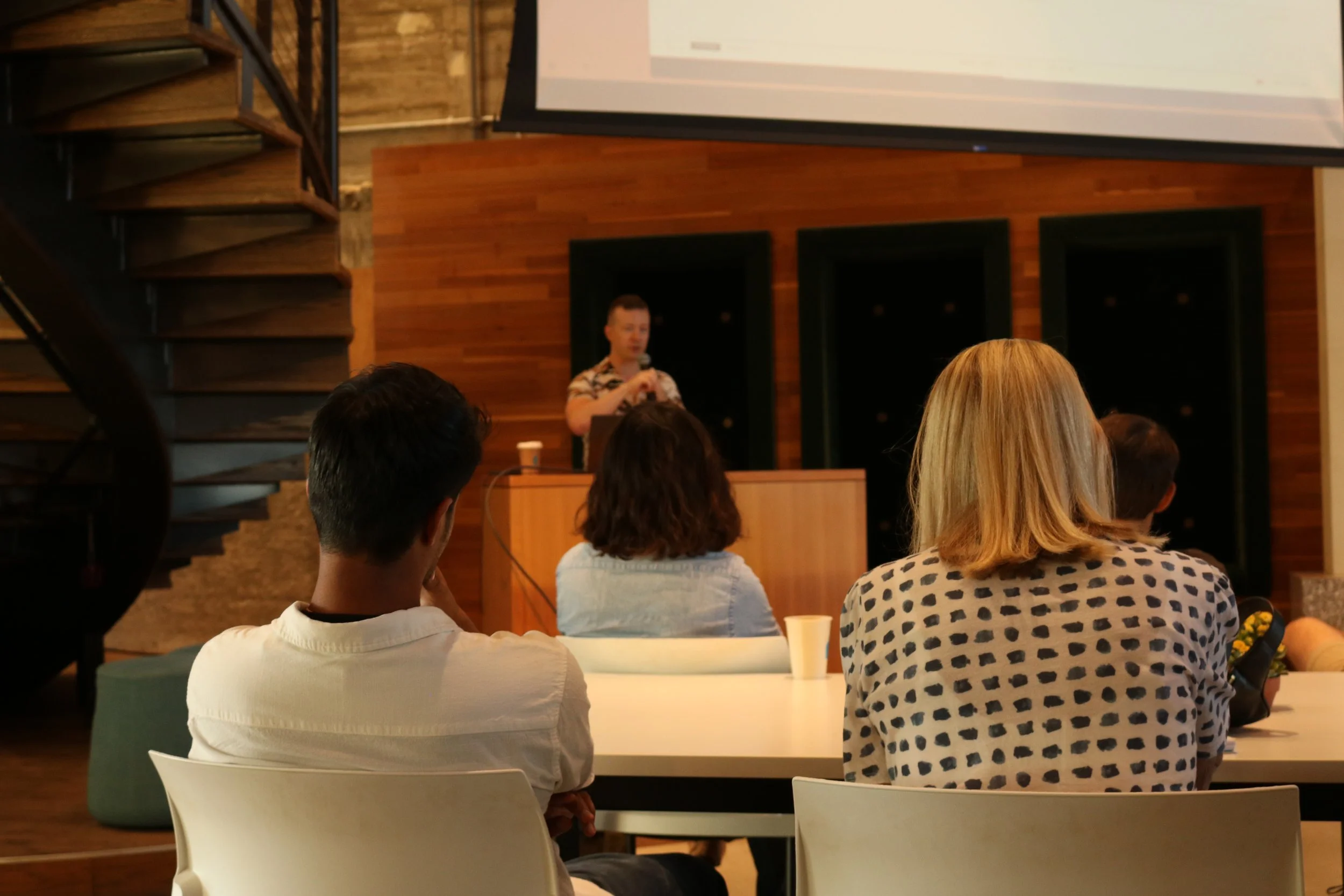
Disclaimer: This presentation reflects the views of the individual speakers and OC AI only. It does not represent the views, positions, or endorsements of HanaHaus or SAP. The event was hosted to foster open dialogue and knowledge-sharing within the AI and technology community, and any opinions, tools, or approaches discussed are shared for informational and discussion purposes only.
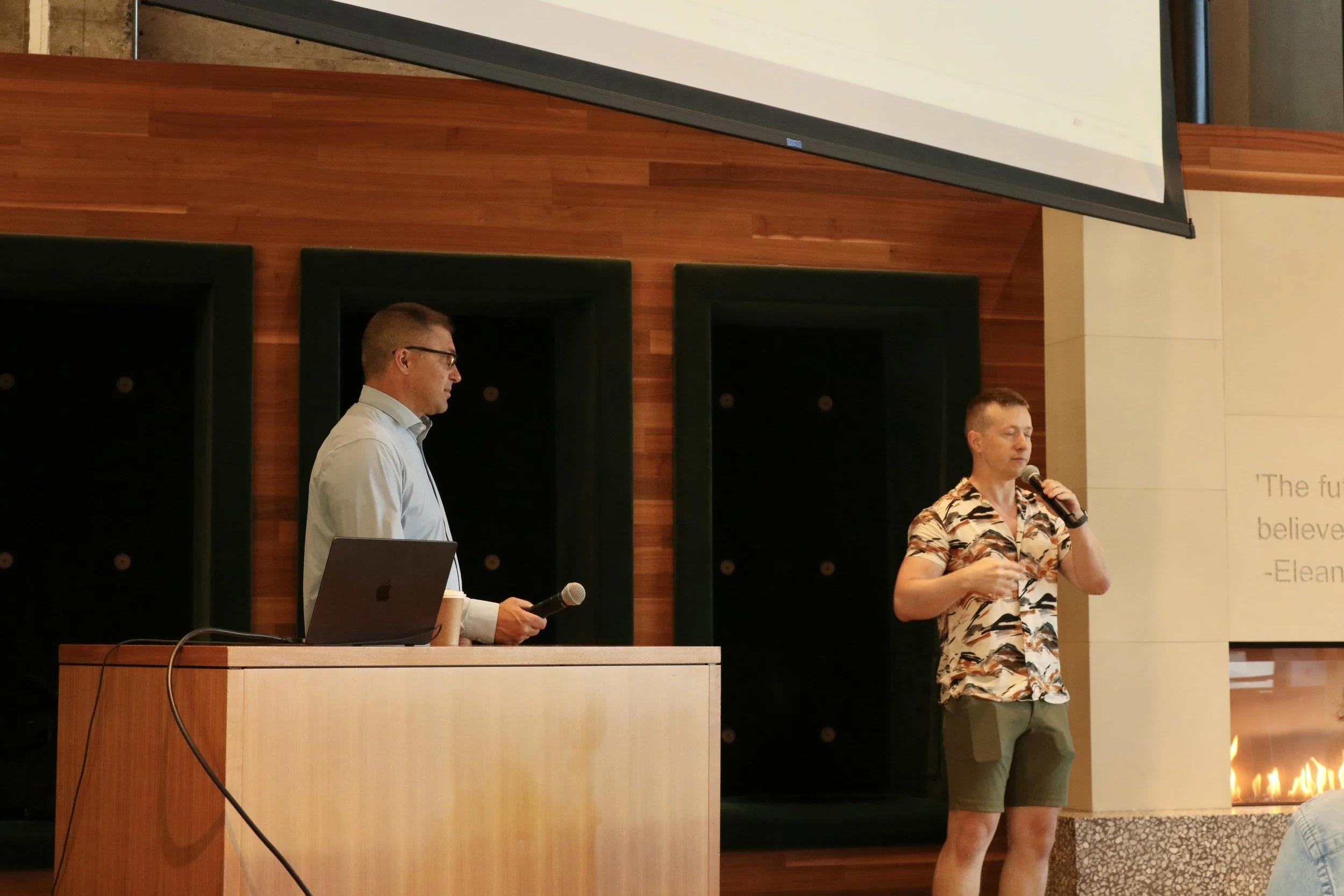
Nick Newsom (left) and Stephan Fitzpatrick (right)
A recent Orange County AI workshop hosted at HanaHaus Newport Beach, led by Stephan Fitzpatrick (Founder, Orange County AI) and Nick Newsom (Chief Revenue Officer, Sharpen), gave a room full of developers a hands-on look at "agentic coding" — AI systems that don't just answer questions, but actively act inside real business software. The session skewed technical and assumed a fair amount of existing familiarity with AI tools, but the ideas underneath are worth understanding even if you've never touched a terminal: these are the same systems increasingly running sales pipelines, customer support, and internal operations behind the scenes.
Nick opened with a business case study from his time as a Chief Revenue Officer inside a private-equity rollup, where he inherited over 50 disconnected software systems (multiple versions of Salesforce, several help desks, and more) across sales, marketing, and customer success. Rather than forcing his team to learn each tool's interface, he connected an AI agent to all of them and let people interact through plain language instead. One example, an internal bot called "Buster," let non-technical salespeople request new features, like a custom input screen, directly in chat; the AI would write the code, submit it for a one-click review and approval, and merge it in. His broader takeaway: businesses often lose sight of the customer while chasing features and staying close to a company's biggest accounts ("herding cattle, not cats," as he put it) tends to matter more for finding product-market fit than technical polish.
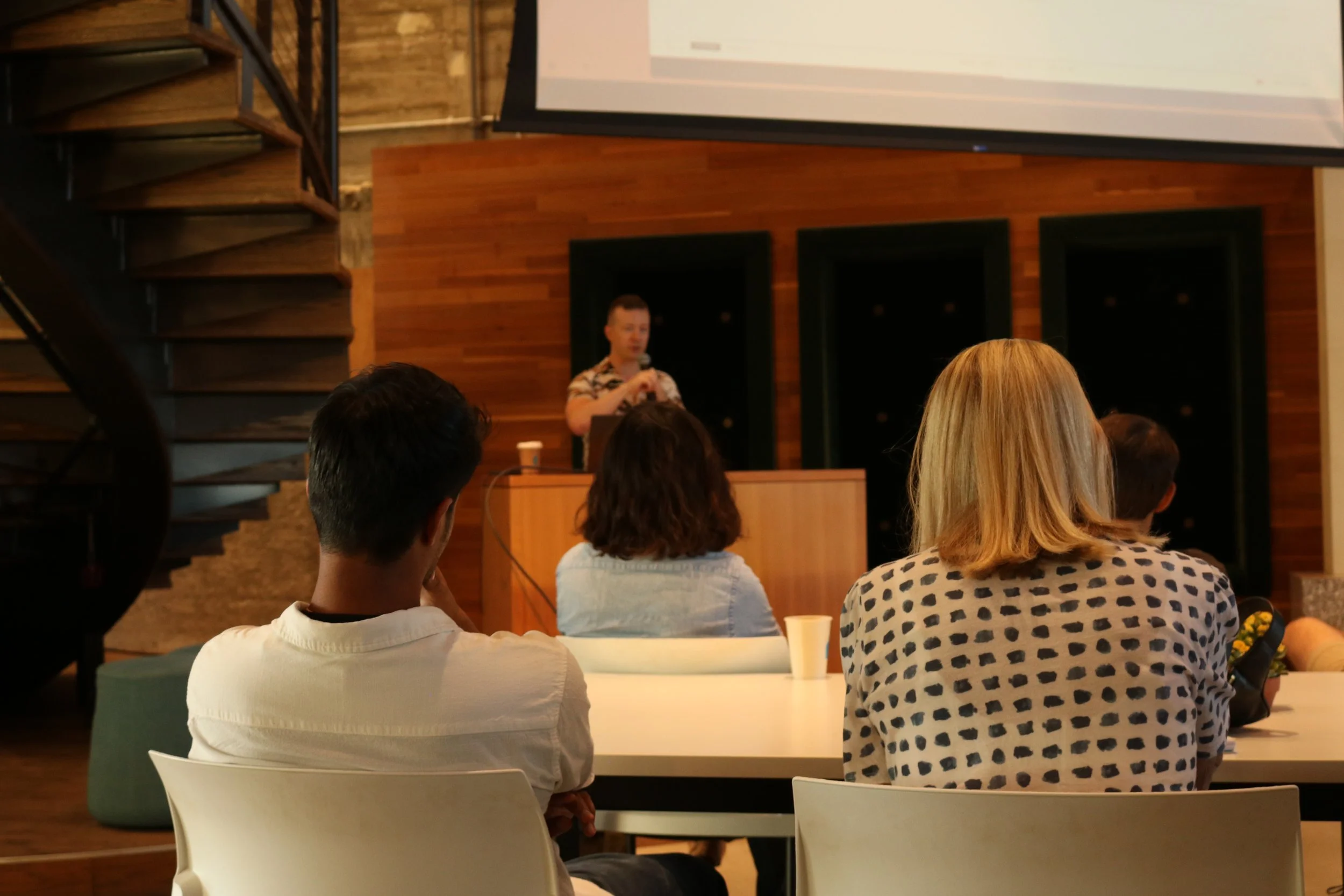
Stephan then unpacked the technical side, starting with a widely used definition from Django co-creator Simon Willison: an AI "agent" is simply a language model running in a loop with access to tools. The "harness" is the software layer around that model — managing context, tool calls, and memory. He compared four current options: Claude Code (Anthropic's harness, the most popular but the only one that's closed-source), Codex (OpenAI's), and two open-source projects, Pi (a deliberately minimal harness) and its more feature-rich fork, sometimes called "Oh My Pi." Interestingly, independent benchmarks from a company called Composio have found the minimalist Pi harness often outperforms bulkier alternatives despite having fewer built-in tools; a reminder that more features don't automatically mean better results. Stefan's central point, echoing Nick's, was that an agent's usefulness comes down to how many real systems (email, ticketing, CRM, payments) it's connected to; needing to copy-paste information into a chat is, in his view, a sign of a missing integration.
On the infrastructure side, Stephan demoed his own personal setup, built around a tool called Herder — a terminal multiplexer (similar in spirit to the developer tool tmux) purpose-built for running and coordinating many AI agents at once, letting them monitor each other's status and even spin up new agents programmatically. Running a dozen-plus agents in parallel is genuinely resource-intensive; he clocked around 50GB of RAM in active use in his own environment. He also shared his own take on a less comfortable industry wrinkle: because U.S.-based AI providers restrict certain security-related requests by policy, some of the most capable models for cybersecurity work at the moment come from Chinese labs (he cited a model called GLM 5.3) — his view of how quickly the competitive and regulatory landscape around AI is shifting.
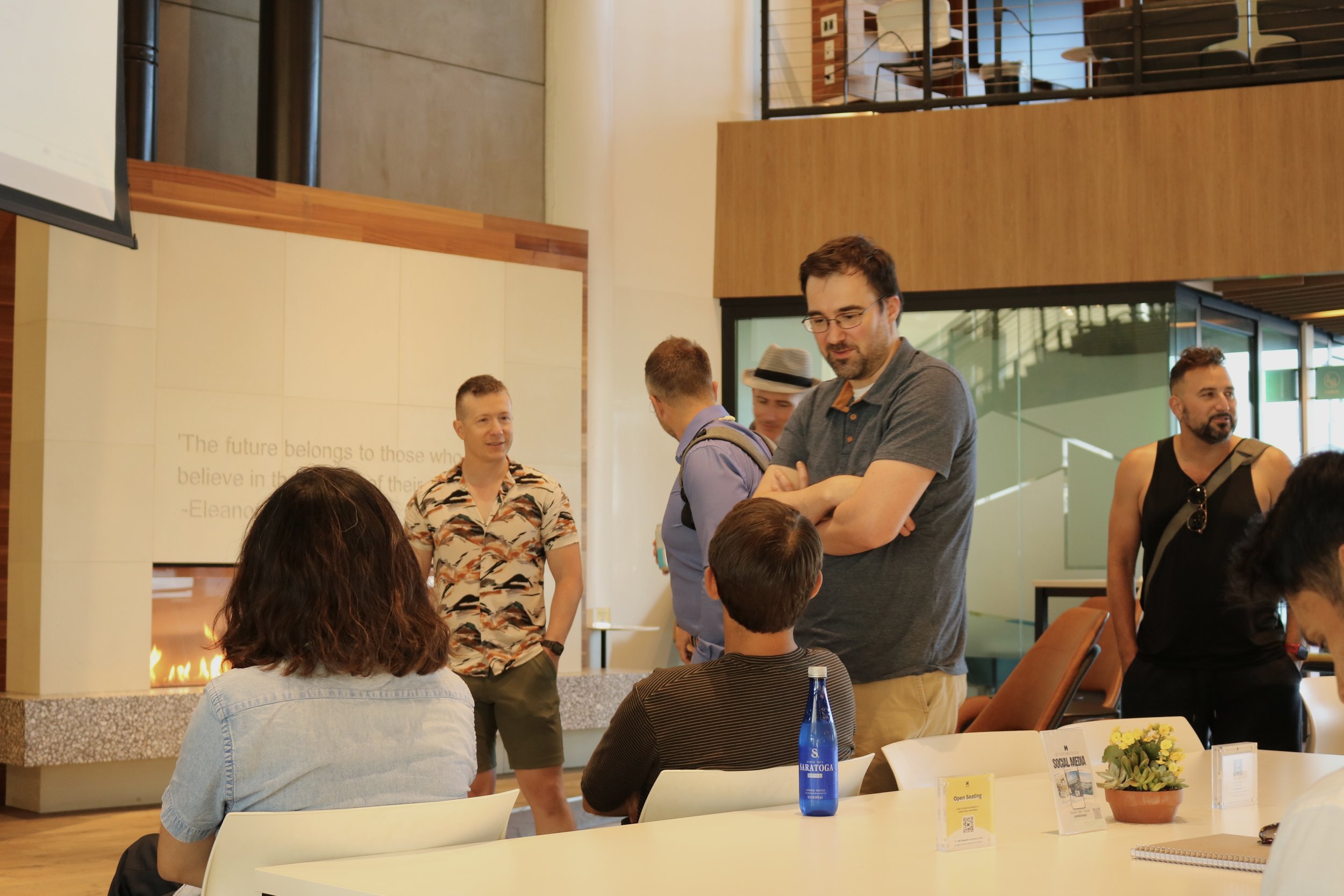
Consider this session the appetizer: on September 3rd, AI OC returns with "From Coding Agents to Operation Agents" — a deeper, more business-focused look at what happens when these same tools move beyond writing code to actually running day-to-day operations. If you're curious what that shift looks like in practice, this is the one to catch.
Disclaimer: This post was written with the assistance of AI, based on the event transcript.